New Onetime Lifetime Subscription

Payment
To make the site more accessible, we have decided to remove the yearly subscription and keep only a one-time, lifetime payment to get access to all content at www.ctchestreview.com and www.ctbiopsy.com. These sites are linked and hence one payment gives access to both sites, but the
Current Case:

66-years old man presented with a mass in the spleen involving the tail of the pancreas.
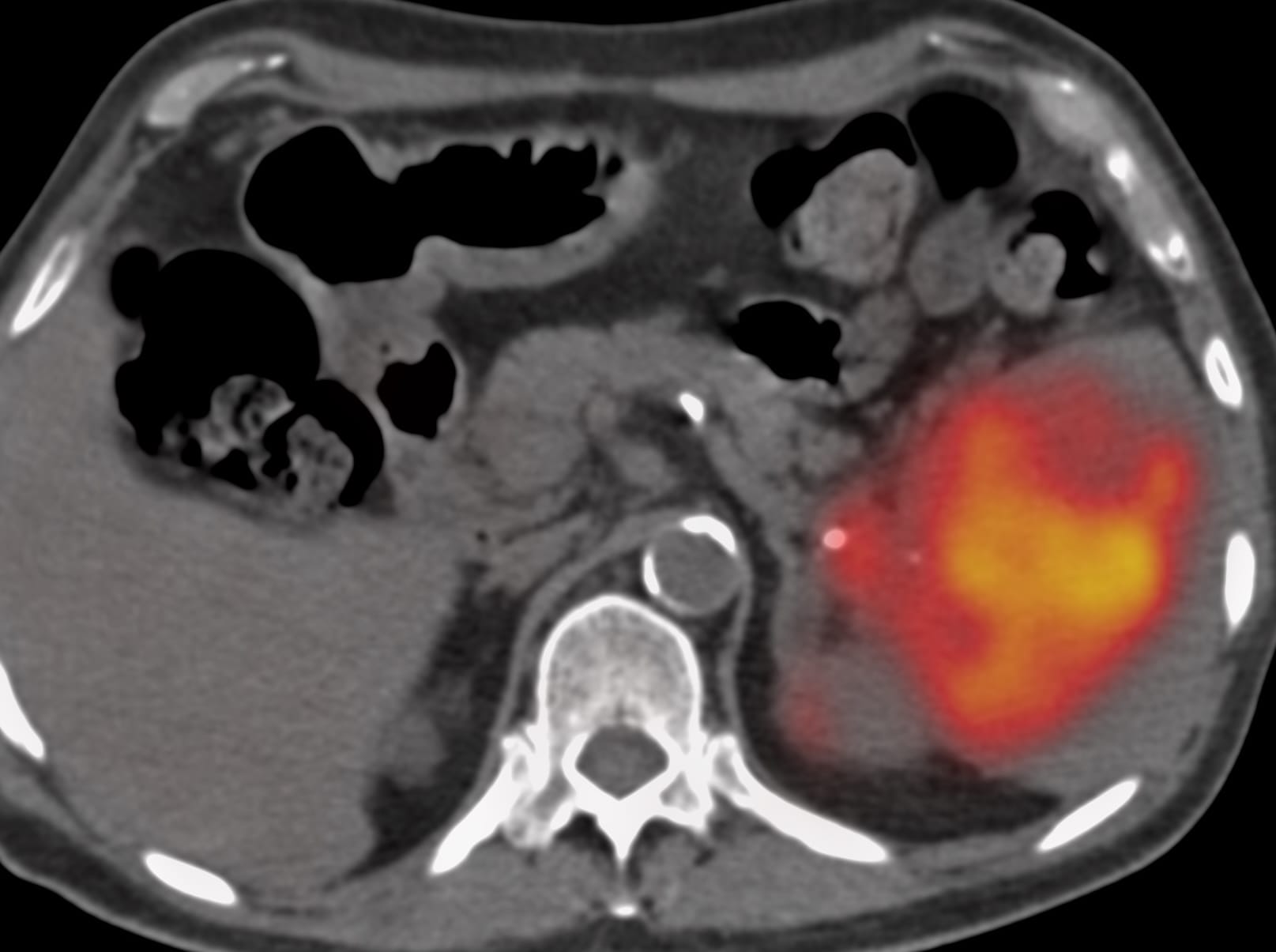
The patient came for a biopsy and I decided to use an anterior approach in the supine position.
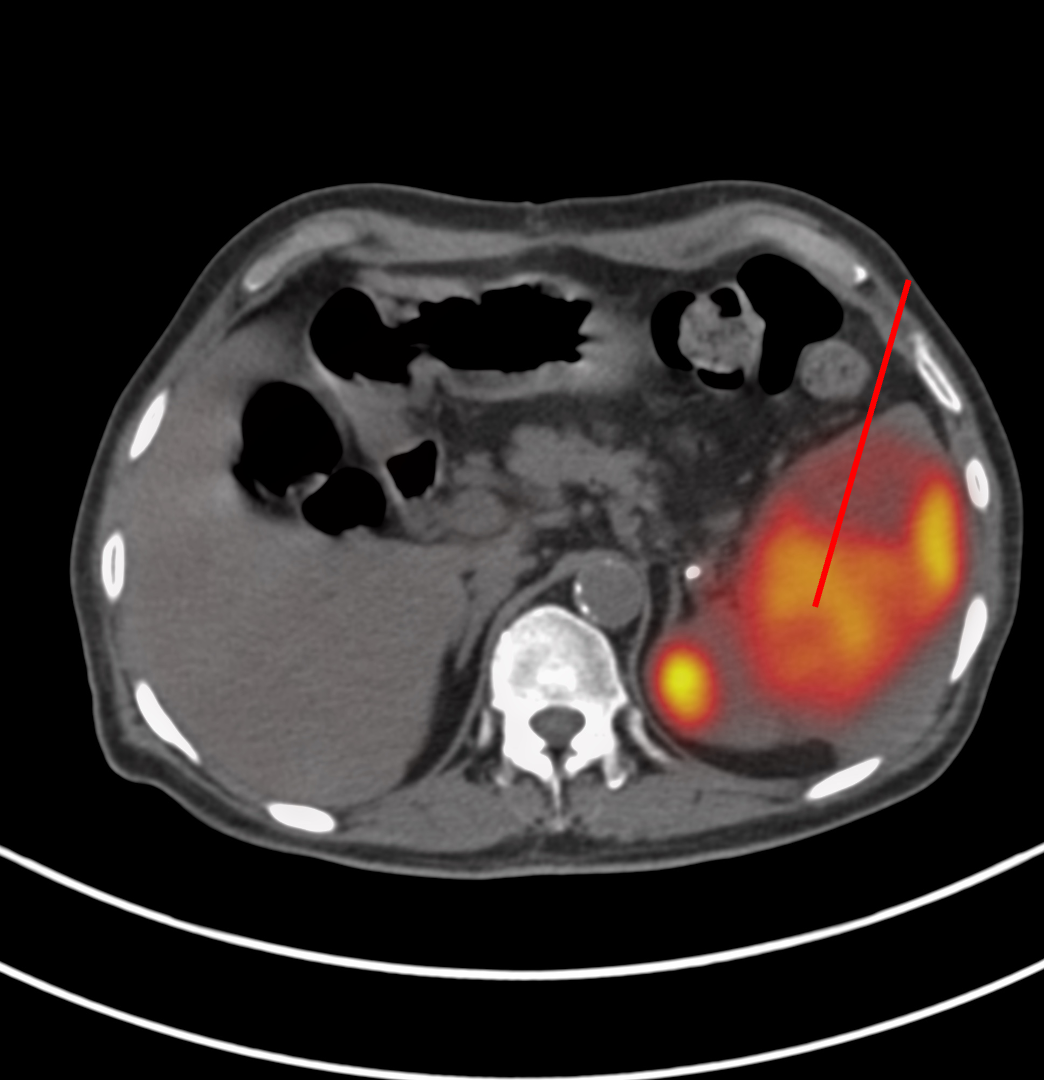
I had described a splenic lesion biopsy earlier as Case 115.

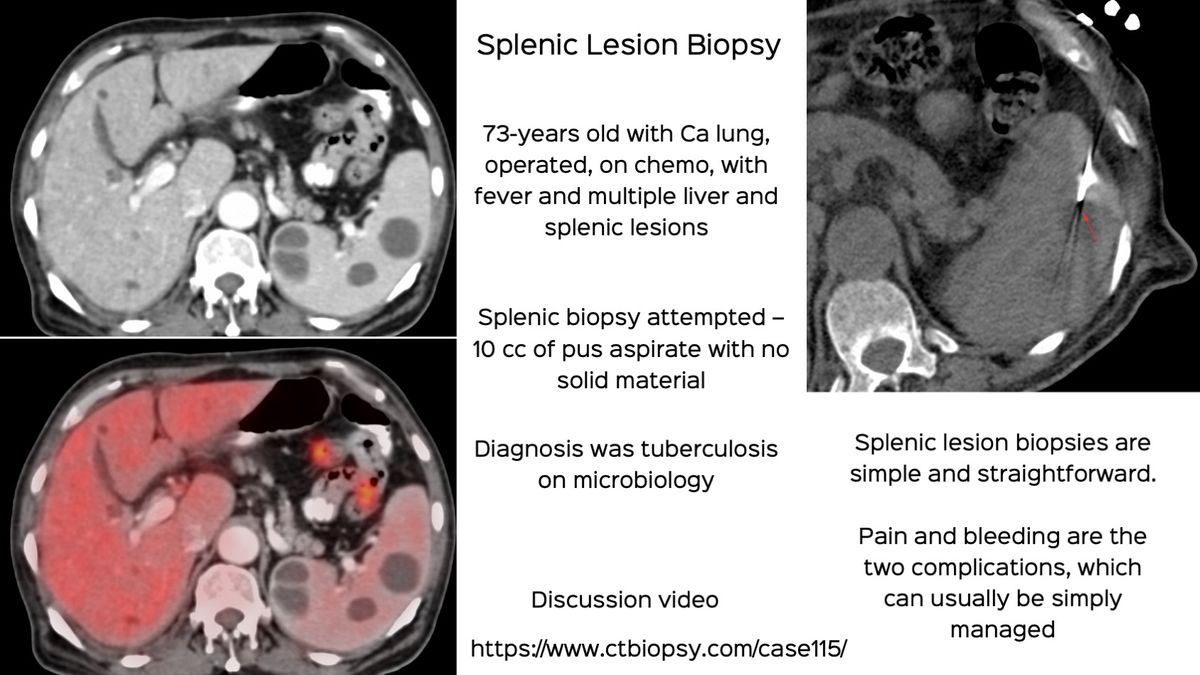
Case 115: Splenic Lesion Biopsy
Splenic lesion biopsies are simple and straightforward. Bleeding and pain are the two main issues.
The video below describes the case, the final outcome, 3 new papers in the last years, since Case 115 and one more case.

Click here if you can't see the embedded video in your email.

Region: Spleen
Age: 66 years
Findings: Large splenic mass involving tail of pancreas
Lesion Biopsied: Splenic mass
Size of Lesion: > 30 mm
Gun: 18G BARD, 20 mm throw, long
No of cores: 5 for HP
Sedation: No
Position & Approach: Supine
Time Taken (marker to wash-out): 6 mins
Complication: 75 cc bleeding perisplenic stable after the 1st hour
Level of Difficulty: 3/5
Diagnosis: Non-Hodgkin’s lymphoma, large B-cell type

Table of Contents and Other Pelvic Node Biopsies

Table of Contents
Table of Contents

Previous Post:

Case 170 - Peri-Aortic Soft Tissue Biopsy
Peri-aortic soft tissue can be biopsied safely if at least 8 mm width is available for needle placement. Using intravenous contrast during the procedure helps to identify the aortic margins.

Other Sites and Cases:

Case of the Day on YouTube

Snippet 28: Connective Tissue Disease ILD Patterns
A discussion of the various patterns seen in CTDs. UIP and variants, NSIP, BIP, LIP, PPFE, OP, mixed and rapidly progressive.
Case 55: Typical or Atypical?
70-years old with a slowly growing mass in the right thigh
The Updated 2023 CBD Data on Risk Factors and Diseases That Cause Death and Disability
It is important to know what risk factors and diseases kill us, so that we can take action to mitigate risk and prevent disease