Index and Table of Contents

174 Cases with Videos
5 Cases with Images
2 Snippets
5 Lectures
4 Cases of the Day (CODs)

Table of Contents
Table of Contents

New Onetime Lifetime Subscription

Payment
To make the site more accessible, we have decided to remove the yearly subscription and keep only a one-time, lifetime payment to get access to all content at www.ctchestreview.com and www.ctbiopsy.com. These sites are linked and hence one payment gives access to both sites, but the
Not all cases need videos. Some can be explained with just images.


Current Case:

82-years old known to have T-cell non-Hodgkin's lymphoma had a PET in Jan that showed enlarged mediastinal and left supraclavicular nodes.
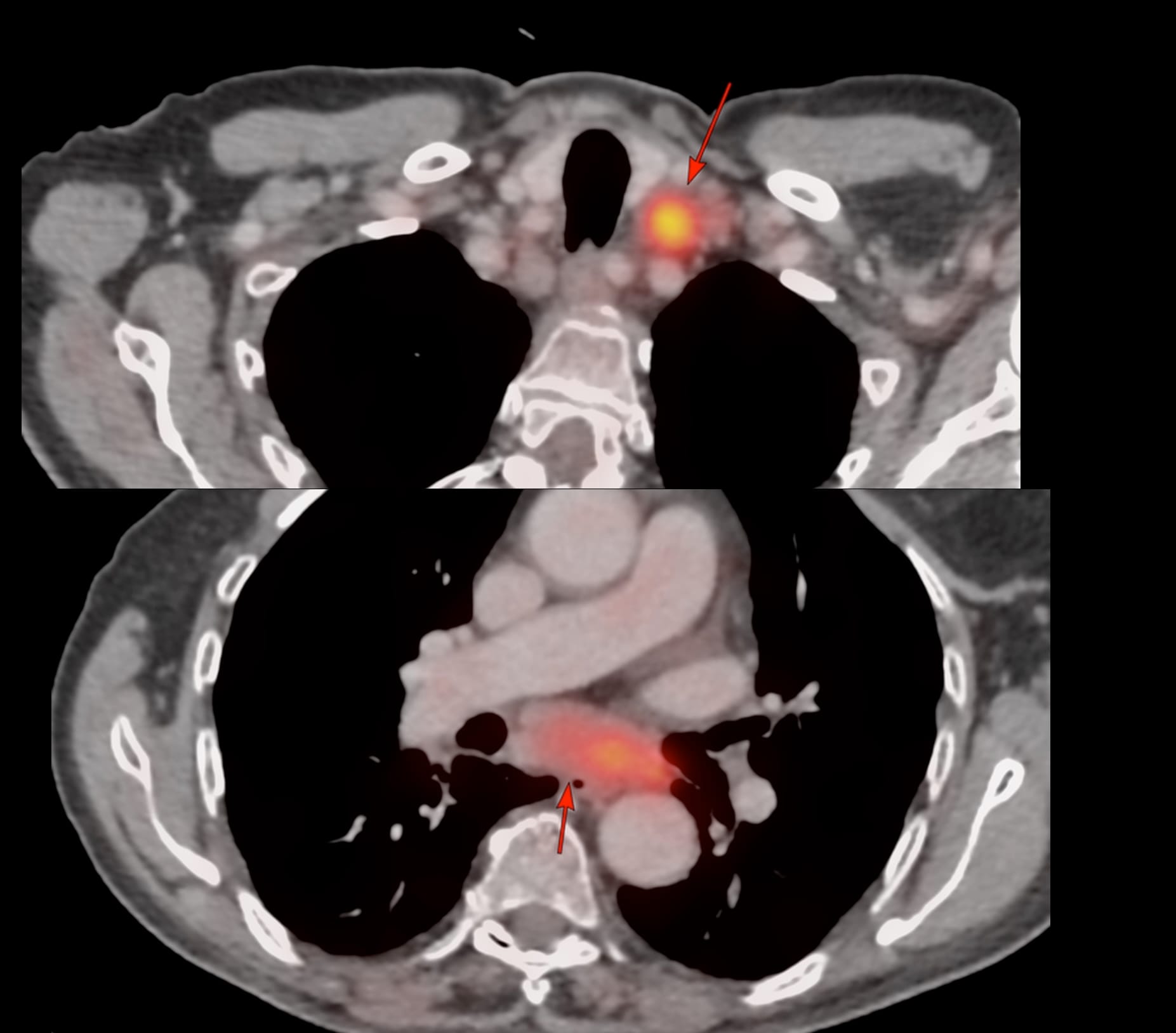
USG guided left supraclavicular node biopsy was negative for any specific diagnosis.

3 months later, he clinically worsened and CT scan showed the same nodes with mild increase in the subcarinal node size and bilateral effusions and he was referred for a CT guided biopsy of the subcarinal node. The short axis of the node was 25 mm, so biopsy was feasible.
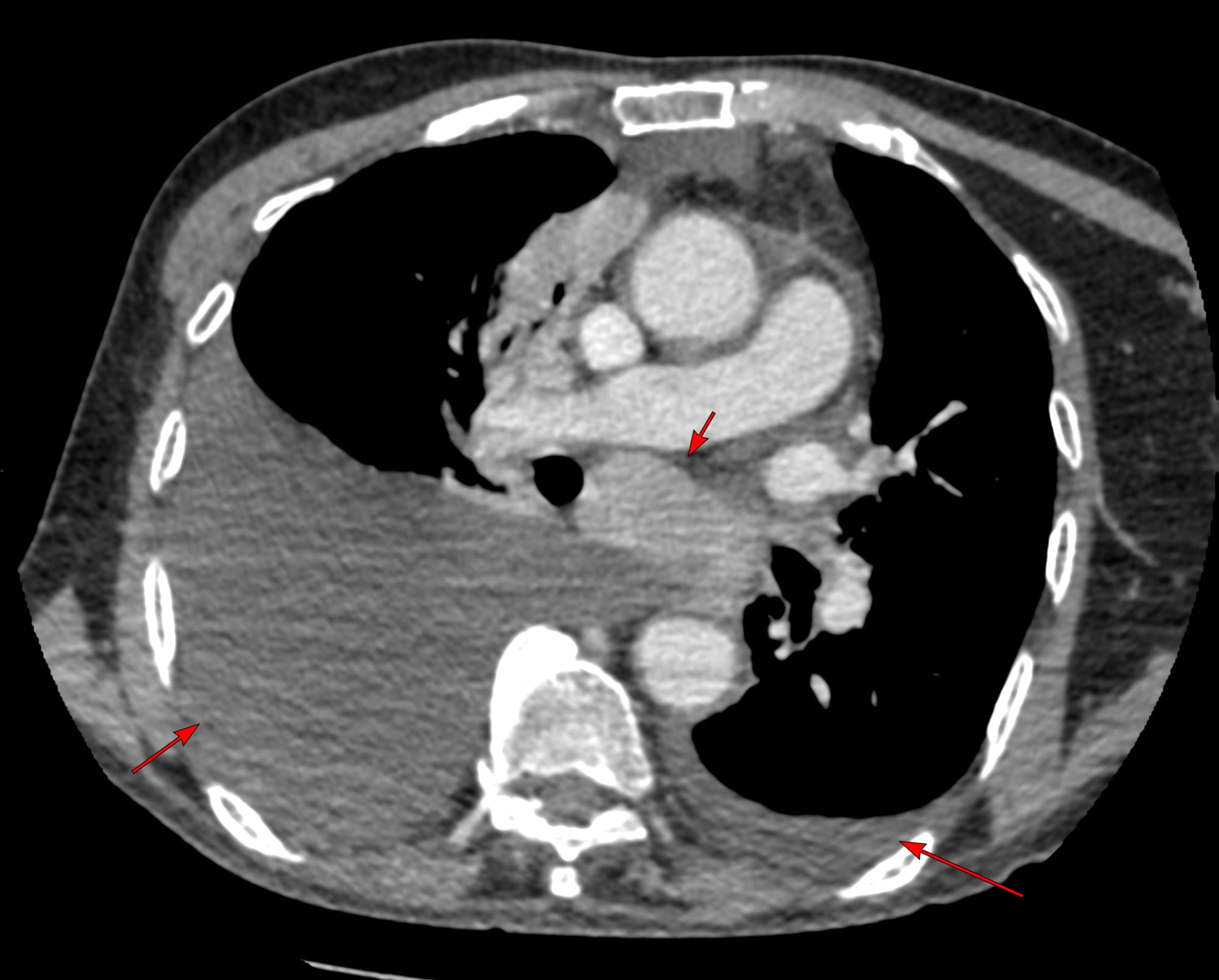
The effusion was a concern, but in the prone position, the fluid moved anteriorly and did not come in the way, though a transeffusion or transpneumothorax biopsy is always a possibility.

Case 32: Subcarinal Node Biopsy - Transpleural Approach - Pre-Existing Pneumothorax
55-years old with subcarinal adenopathy - transpleural biopsy through a pre-existing pneumothorax

The lung was almost at the midline and there was concern that a transparenchymal approach (A) may be needed as in the last case.

Case 178 - Transparenchymal Paratracheal Node Biopsy
If an extrapleural approach is not possible for any reason, a transparenchymal route is always available to target mediastinal lesions and is usually safe and simple, especially in the young

Using an 18G Cook needle, 8 cc of lignocaine was injected in the space between the pleura and foramen in the inter-transverse space (B). Once some space was created then it was advanced with 3 injections of 10-15 cc of a combination of lignocaine and saline (C, D), until the needle tip rested along the posterior margin of the node (D) and then it was pushed into the node (E) followed by the biopsy (F). The gun has a 10 mm throw.

6 cores were obtained for histopath and 1 for microbiology and the final diagnosis was relapse of T-cell NHL.

This again takes off my last post on the transparenchymal approach to paratracheal node biopsies. An extrapleural approach with hydrodissection can usually easily be done and while EBUS is commonly used these days, it is not superior to CT guided biopsy, just non-inferior.

Hydrodissection can help push away even lung that extends up to or sometimes across the midline.

This biopsy took 13 minutes from placing the marker to removing the needle and with preparation, counseling, and post-operative stay of 90 minutes, the entire day-care time was 2 1/2 hours and the patient went home normally.

CT guided biopsies are simpler, easier, quicker and much less expensive than EBUS or similar procedures and while fewer and fewer radiologists are learning these skills, they are well worth the effort even today and for the foreseeable future.

Region: Mediastinum
Age: 82
Findings: Enlarged mediastinal nodes
Lesion Biopsied: Subcarinal node
Size of Lesion: 25.1 mm z axis
Gun: 18G Cook, 10 mm throw, long
No of cores: 6 for histopath and 1 for micro
Sedation: No
Position & Approach: Prone, extrapleural
Time Taken (marker to wash-out): 13 mins
Complication: None
Level of Difficulty: 3/5, 4/5
Diagnosis: Relapse of T-cell non-Hodgkin’s lymphoma (NHL)


Similar Biopsies

Case 45: Subcarinal Node Biopsy…and The Six Weeks Conundrum
17-yrs, enlarged subcarinal node, extrapleural biopsy, indeterminate granulomatous disease - HP, -ve PCR & only 6-weeks culture +ve
Case 29: To Biopsy or Not to Biopsy...That is Often the Question
3 scenarios...is a biopsy necessary? Even if necessary, should be we do or wait? Are we mere biopsiologists or diagnostic radiologists or both?

Table of Contents - Other Subcarinal Node Biopsies


Previous Posts:

Case 178 - Transparenchymal Paratracheal Node Biopsy
If an extrapleural approach is not possible for any reason, a transparenchymal route is always available to target mediastinal lesions and is usually safe and simple, especially in the young

Other Sites and Cases:

Case of the Day on YouTube